

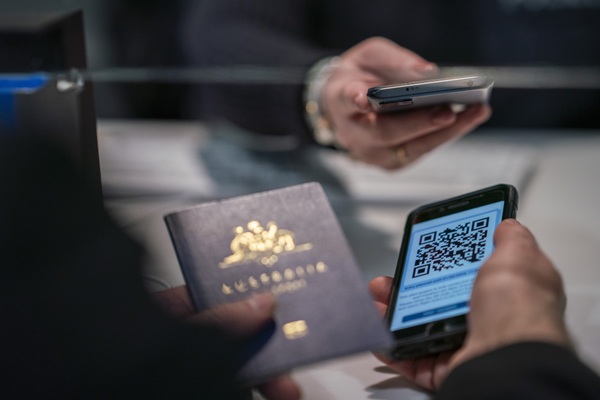

By allowing non‑EU travelers to submit personal and trip details before arrival, the app aims to reduce wait times and simplify the border‑crossing experience.
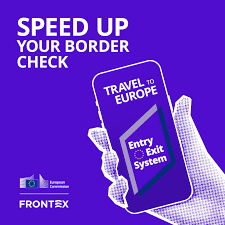
With the peak travel season approaching—and with Portuguese airports still uncertain about whether the EES system that caused significant delays last year will need to be reinstated—the European Border and Coast Guard Agency, Frontex, has introduced a new mobile application intended to streamline airport procedures.
The Travel to Europe app, now available on the App Store, Google Play, and other major platforms, can already be used by non‑European travelers arriving at Lisbon Airport. The rollout to Portugal’s remaining airports is expected within the next several weeks.
According to a joint statement issued by Portugal’s Internal Security System (SSI), the Public Security Police (PSP), and the National Republican Guard (GNR), in coordination with the government, the app enables “travelers from third countries to pre-register travel information before arriving at border control, making the entry process more efficient.”
The application was developed as part of the European Union’s Entry/Exit System (EES), which aims to modernize and accelerate border checks for non‑EU nationals. By allowing travelers to submit personal and travel information in advance, authorities can process part of the required data before the traveler reaches the border, thereby “contributing to a more agile procedure,” the statement notes.
When available, this pre‑registration can be used at self‑service kiosks located at border control points.
An SSI official confirmed to Lusa that the app became operational in Portugal yesterday. It also includes a questionnaire designed to reduce the number of questions border officers must ask in person. Travelers may complete the form up to 72 hours before departure, generating a QR code that can be scanned at self‑service kiosks.
Use of the app is entirely optional. However, authorities emphasize that it is intended to simplify the entry process. As the joint statement clarifies: “Although the app is not mandatory and does not replace standard border control procedures, it allows certain required information to be processed in advance, making entry into Europe simpler and more efficient for both travelers and border authorities.”
Meanwhile, the EES system—suspended for three months in December due to the operational disruptions it caused—remains on hold. An SSI source confirmed that the collection of biometric data continues to be postponed, although “several tests” have recently been conducted.
What is the “Travel to Europe” mobile app?
The Travel to Europe mobile application is designed for non-EU travellers who are subject to EES registration. It allows people to pre-register their passport data and facial image before reaching a border crossing point where the EES is in use. Through the app travellers can also fill in the entry conditions questionnaire in advance.
Non-EU nationals can use the app to pre-register their data within 72 hours prior to entering or leaving a European country using the app.
The app does not replace border checks but makes border crossing smoother and faster and more efficient.
Who can use the app?
The app is designed for non-EU nationals subject to EES registration who hold a biometric passport.
Before using it, make sure that the European country where you plan to enter or exit supports the app. Using the app is optional, but it can help you save time and speed up border checks.
The EES does not apply to:
- Nationals of the European countries using the EES, as well as Cyprus and Ireland.
- Non-EU nationals who hold a residence card and are immediately related to an EU national.
- Non-EU nationals who hold a residence card or a residence permit and are immediately related to a non-EU national who can travel throughout Europe like an EU citizen.
- Non-EU nationals travelling to Europe as part of an intra-corporate transfer or for the purposes of research, studies, training, voluntary service, pupil exchange schemes or educational projects and au-pairing.
- Holders of residence permits and long-stay visas.
- Nationals of Andorra, Monaco and San Marino and holders of a passport issued by the Vatican City State or the Holy See.
- People exempt from border checks or who have been granted certain privileges with respect to border checks (such as heads of state, accredited diplomats, cross-border workers, etc.). Diplomats travelling on short stay may be exempt from EES registration under certain conditions.
- The exception from registration in the EES apply to members of the armed forces travelling on NATO or Partnership for Peace business, who hold an identification and individual or collective movement order provided for by the Agreement between the parties to the North Atlantic Treaty regarding the Status of their Forces and may apply to civilian component or dependents referred to in the NATO Status of Forces Agreement.
The exception applies to NATO International Civilians based in any of the 29 European countries using the EES and their dependents. - People not required to cross external borders solely at border crossing points and during fixed opening hours.
- People holding a valid local border traffic permit.
- Crew members of passenger and goods trains on international connecting journeys.
- People holding a valid Facilitated Rail Transit Document or valid Facilitated Transit Document, provided they travel by train and do not disembark anywhere within the territory of an EU Member State.
- Legal base: Article 2(3) of Regulation(EU) 2017/2226
How to use the app?
- Download the app from App Store or Google Play.
- Create a new journey by selecting the European country using the EES you are arriving in or leaving from not earlier than 72 hours before the start of your journey
- Select the border crossing point and the time of your expected arrival there
- Scan the personal details page and the chip of your passport
- Take a selfie to confirm your identity
- Answer a few questions about your travel plans
- Optional: add co-travellers using steps 2-6
- Submit your journey
- Receive a confirmation that your journey has been accepted
- Go to the border crossing point and follow the border guard’s instructions
You can view and download the European Union entry/exit system (EES) quick guide on how to use the app (PDF, 96.3 KB). It’s a simple step‑by‑step overview to help you get started right away.
More information: European Union Entry/Exit System website
mage from Photo by Marta Branco: Pexels
Sources:
European Union Entry/Exit System (EES) – to whom does not apply (https://travel-europe.europa.eu/ees/to-whom-does-ees-not-apply)
European Union Entry/Exit System (EES) – Travel to Europe mobile app(https://travel-europe.europa.eu/ees/Travel-to-Europe-mobile-app)
European Union Entry/Exit System (EES) Home page – https://travel-europe.europa.eu/ees